- Rackmount Cabinets & Frames Parts
- sku: 1193310419868532
- DELL R08HK
R08HK DELL Teradici Pcoip Ports Remote Access Card
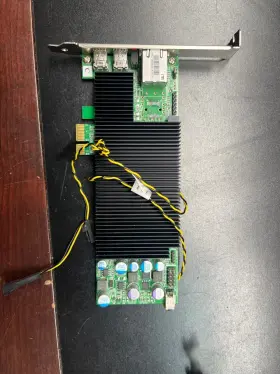
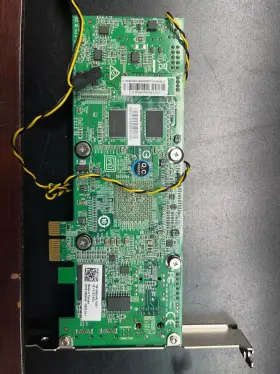
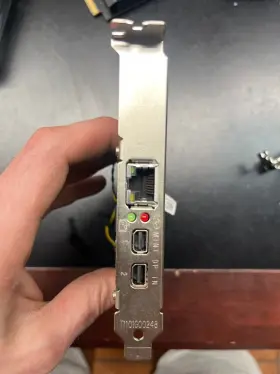
| Brand | DELL |
|---|---|
| Manufacturer Part Number | R08HK |
| Type | SERVER OPTIONS |
Review DELL Teradici Pcoip V3 Ports Remote Access Card New Pull
The Dell R08HK 10ZIG Tera2 V3 is a versatile and powerful remote access solution designed for organizations seeking to extend their desktop or application environments to remote or branch office locations. This compact, high-performance PCIe card from Dell and Teradici offers 10 PCoIP remote access ports to enable secure, high-definition access to data and applications from any location.
Measuring just 8.4 inches in length, the R08HK 10ZIG Tera2 V3 is a space-saving addition to any server. It supports up to 10 simultaneous PCoIP sessions, providing users with a responsive and efficient remote desktop experience, even for demanding applications. Each session speaks the industry-standard Remote Desktop Protocol (RDP), providing compatibility with a wide range of applications and operating systems.
The card utilizes Teradici's PCoIP protocol, which is renowned for its ability to deliver low-latency, lossless graphics and support for rich media files, ensuring an immersive and high-definition remote desktop experience. The Tera2 V3 also features hardware-accelerated compression technology, which enables efficient data transfer and significantly reduces the need for bandwidth.
Installing the R08HK 10ZIG Tera2 V3 is a snap. Its PCIe form factor ensures easy integration into any standard server, and it is compatible with popular operating systems, including Red Hat Enterprise Linux, Microsoft Windows Server, and Ubuntu Server. Additionally, the card supports Citrix XenServer and Microsoft Hyper-V virtualization platforms, making it an excellent choice for virtual environments.
Security is a top priority with the Dell R08HK 10ZIG Tera2 V3. The card complies with stringent industry standards, including FIPS 140-2 Level 1 certification. It also offers robust encryption to protect data in transit, providing peace of mind for organizations handling sensitive information.
Configuring the R08HK 10ZIG Tera2 V3 is simple, thanks to the intuitive Zightpad 4 management software. This powerful tool allows for the creation, management, and monitoring of PCoIP sessions, as well as advanced functionality such as session recording and flexibility in handling multiple user sessions per host.
In conclusion, the Dell R08HK 10ZIG Tera2 V3 is an indispensable addition to any organization's remote access infrastructure. With its support for 10 simultaneous high-definition PCoIP sessions, compatibility with popular virtualization platforms and operating systems, and advanced security features, this versatile PCIe card offers a seamless, efficient, and secure remote working experience.
The Dell R08HK 10ZIG Tera2 v3 is a remote access card designed for implementing Teradici PCoIP technology in Dell servers. PCoIP (PC over IP) is a remote display protocol that provides a high-performance, secure, and interactive user experience for accessing remote desktops and applications. Here are some pros and cons of buying a Dell R08HK 10ZIG Tera2 v3:
Pros:1. High Performance: The Dell R08HK 10ZIG Tera2 v3 supports multiple concurrent PCoIP sessions with excellent graphical performance, making it an ideal solution for accessing resource-intensive applications remotely.
2. Remote Management: The card enables remote management of the connected server through PCoIP, allowing system administrators to manage servers offsite without the need for physical presence.
3. Multi-Factor Authentication: The Tera2 v3 supports multi-factor authentication methods, increasing the security of your remote access infrastructure.
4. Compatibility: The card is compatible with numerous Dell PowerEdge server models, allowing users to leverage the benefits of PCoIP technology in their existing infrastructure.
Cons:1. Cost: The Dell R08HK 10ZIG Tera2 v3 is a premium solution, and the cost of the card, along with the necessary infrastructure (i.e., Teradici licensing), can make it a significant investment for organizations.
2. Dependence on Network Quality: As with any remote display protocol, the user experience of the Dell R08HK 10ZIG Tera2 v3 relies on the quality and reliability of the network connection. A poor network can negatively impact the performance and usability of the solution.
3. Complexity of Implementation: The implementation and configuration of the Dell R08HK 10ZIG Tera2 v3 for PCoIP access can be complex, requiring a good understanding of networking and server infrastructure.
Conclusion:The Dell R08HK 10ZIG Tera2 v3 is an attractive solution for organizations looking for high-performance remote access to data centers. The card offers excellent graphical performance, remote management capabilities, and strong security features. However, it comes with a considerable investment and infrastructure requirements, and there can be challenges in setting it up and optimizing the network for the best possible user experience. If your organization doesn't require the high performance and security features of the Dell R08HK 10ZIG Tera2 v3, there might be less expensive options available for remote access. Consider the specific needs of your organization before investing in this solution.
Recommendation:If high-performance, remote access to mission-critical applications or resource-intensive desktops is a requirement for your organization, it's worth considering the Dell R08HK 10ZIG Tera2 v3. Thoroughly evaluate your organization's networking infrastructure and dedicated resources needed for successful implementation to ensure the best possible ROI.
Details:
Pulled from new computer packed in static bag pulled.
specifications rackmountcab:
- brand: Dell
- mpn: R08hk
- type: Server Options
general rackmountcab:
- category: Computers > Enterprise Networking, Servers > Racks, Chassis Patch Panels > Rackmount Cabinets Frames
shipping rackmountcab:
- carrier: usps
- class: expedited
- type: calculated
- service: usps priority mail
- transit: 4-8 days
payments rackmountcab:
- credit card: mastercard
- other
- wallet: google-pay
seller rackmountcab:
- city: staten island, new york
- # reviews: 43155
- rating: 99.7%
offer rackmountcab:
- availability: in stock
- started: december 12, 2024
- sold #: 22
- in stock #: 2
- options: ship-to-home
- prices: $38.99–$40.00
- item condition: Used
returns rackmountcab:
- policy: returns accepted
- time: 30 days
- method: money back
- paid by: seller
Similar Items:
- Dell Fw90k Network Daughter Card For C6520 Blade Server Due to our range of products, warranty length can very greatly between products. FW90K - network daughter card for Dell C6520 blade server, carefully pulled on-site from working decommissioned servers...(May 10th, 2024)
- Dell 7tvw0 Internal Dual Sd Micro Module Riser Card For Poweredge Mx740c Server The customer must return the product to USA ship-to address listed on order, and only then will save central provide a shipping label for. Input devices. Car audio video. Tools hardware. Audio components. Packaging: can be repackaged for protection during shipping. Portable audio. Warranty, warranty...(November 12th, 2024)
- Dell T2fr2 Tpm 2.0 V5 Security Card For Select 15th Gen Poweredge Servers Security surveillance. Packaging: can be repackaged for protection during shipping. Product specifications. Accessories: may be missing some accessories that are not needed for the functionality of product. The customer must return the product to USA ship-to address listed on order, and only then ...(November 13th, 2024)
- Dell Vg384 Idsdm Micro Sd Idrac Riser Card Reader Module For Poweredge Mx740c Server Car audio video. Warranty, warranty: manufacturer warranty. Factory sealed iodised micro SD Dirac riser card reader module for power edge MX740C server, product condition: brand new in original manufacturer packaging with warranty. Packaging: original manufacturer packaging. Product specifications. ...(November 13th, 2024)
- Apc 3104 New 24u Ar3104 Server Rack Enclosure Dell Hp Servers Cabinet 19 Inch Racks Ventilated- perforated front and rear doors provide ample ventilation for servers networking equipment. Please message me for an accurate shipping quote, I can usually offer discounted multiple units. Side panels are lockable utilizing a single key with the doors. Cable troughs and partitions are ...(November 19th, 2024)
- Dell 3cyxk Drive Backplane Assembly Card For 1u 16th Gen Poweredge Model number 3CYXK, product name Dell 3CYXK back plane assembly card, type drive back plane, compatible part numbers 03CYXK, designed for 1u 16TH gen power edge R660 server, support 10X 2.5-INCH HDD, warranty, warranty: manufacturer warranty. The customer must return the product to USA ship-to ...(November 26th, 2024)
- Dell 04dxm Rear I o Card Connector J Serial 1 To Mic Uart May be missing manuals and/or software. Office supplies. The customer must return the product to USA ship-to address listed on order, and only then will save central provide a shipping label for. Packaging: can be repackaged for protection during shipping. Accessories: may be missing some ...(November 26th, 2024)
- Dell O9c7yp Rail Kit New 2u Sliding Rackrail 9c7yp With its high-quality construction and precision engineering, this rail kit is a reliable choice for any server installation. This Dell rail KIT9C7YPS a 2u server rails slid that is perfect for your enterprise networking and server needs...(November 29th, 2024)
- Dell Okn2d5 Sliding Rail Kit Rdyrl 2u Sl Sff Knsld Cr New In Box Brand new in factory box Dell 2u rail kit RDYRL,2U,SL,SFF,KNSLD,CR DP/n OKN2D5...(December 15th, 2024)
- Dell R4c4x Management Interface Card Routing Cable Mb Paige Sn1 To Riser1 Accessories: may be missing some accessories that are not needed for the functionality of product. The customer must return the product to USA ship-to address listed on order, and only then will save central provide a shipping label for. Product specifications. Office supplies. Open box management ...(December 16th, 2024)
- Dell Mt0mn New Precision T5820 T7820 Tower To Rack Kit Dell precision T5820 T7820 tower to rack kit...(January 3rd, 2025)
